
Romania’s real economy in 2024: moderate GDP growth driven by increase in real income
Current economic context
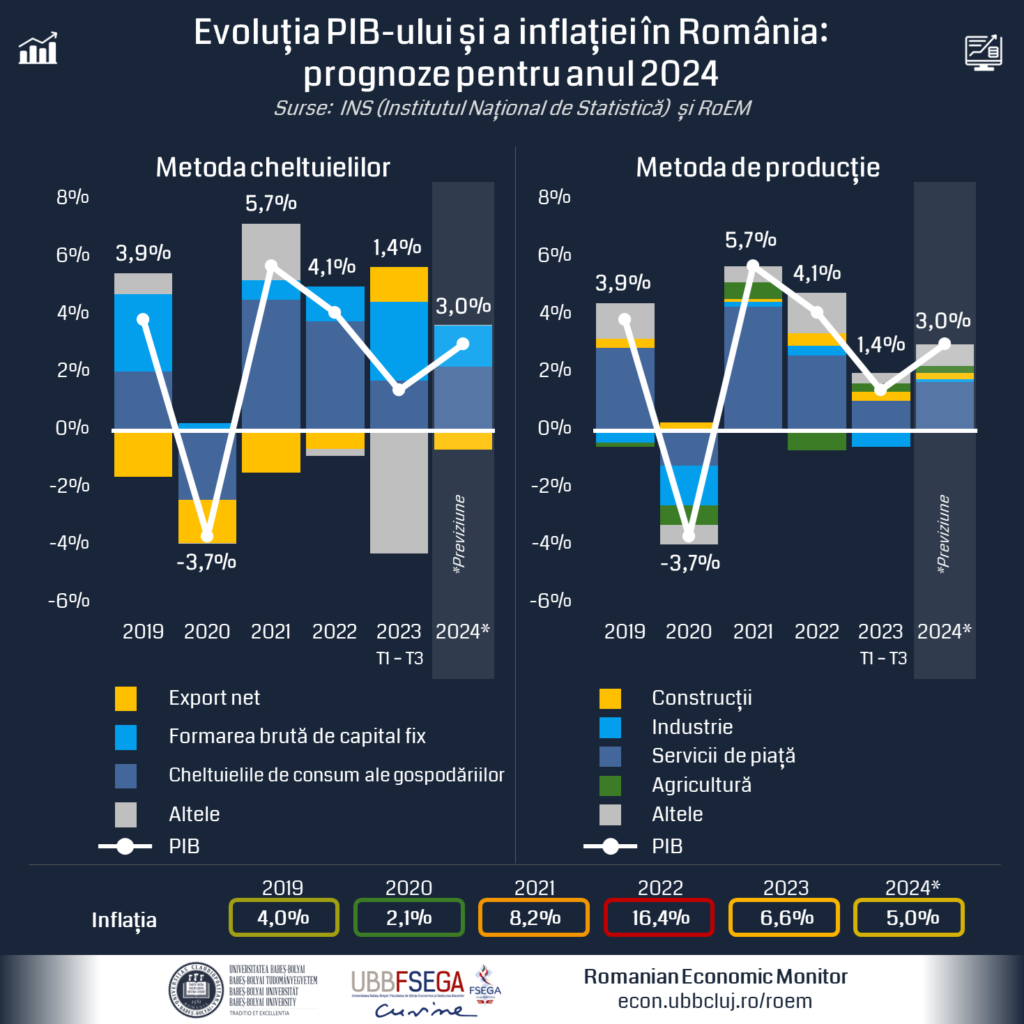
Romania’s economy experienced a significant slowdown in 2023. While GDP growth was 4.1% in 2022, it dropped to 1.4% (seasonally adjusted to 2.2%) in the first three quarters of 2023. The projected annual growth rate for 2023 is 1.8%. This decline was largely due to reduced domestic and external demand, with Romanian households spending more cautiously and low growth in the Eurozone, Romania’s main trade partner. EU funds helped prevent a more severe slowdown. Compared to other Eastern and Central European countries, Romania’s economy performed relatively well, surpassing the EU average by about 0.5%.
2024 economic forecasts
GDP growth in Romania is expected to accelerate to 3% in 2024. This growth will be influenced by two main factors:
- The recovery in the growth rate of disposable real income will boost consumption.
- Continued investments supported by EU funds will stimulate economic activity.
Modest growth in external demand, particularly in the second half of 2024, is expected to benefit Romanian exports. Recent fiscal measures, including the gradual elimination of favorable tax regimes in certain sectors and increased corporate taxes, may exert pressure on these sectors. However, this impact may be offset by increased government spending on pensions and salaries. The budget deficit is anticipated to remain high, suggesting the need for additional measures post-elections to ensure long-term fiscal stability.
Key GDP components for 2024
- Household Consumption: Expected to recover due to increasing real incomes, despite higher taxes. Inflation is projected to decrease to 5% by December 2024, down from 6.6% in December 2023.
- Exports: Slight growth in external demand from key trading partners is expected, although the overall export growth rate may remain modest.
- Investments: Continued healthy growth in investments driven by EU funds is anticipated, though surpassing the previous year’s over 10% growth may be challenging. Non-residential construction is expected to benefit most from EU funds.
Sectoral insights
- Services: Market services, especially retail, will likely benefit from consolidated demand.
- Industry: Signs of stabilization are expected, with modest growth in external demand helping improve the situation.
- Construction: Despite challenges, including delayed government payments, the construction sector is expected to perform well, driven by infrastructure investments supported by EU funds.
- Agriculture: An average yield is expected, leading to modest growth compared to the previous year.
Overall, Romania’s economy in 2024 is poised for moderate growth, supported by real income increases, EU funds, and external demand, despite potential challenges from fiscal policies and external risks.