
Romania 2026: the mirror year. Similar full-year prints, reversed sequencing.
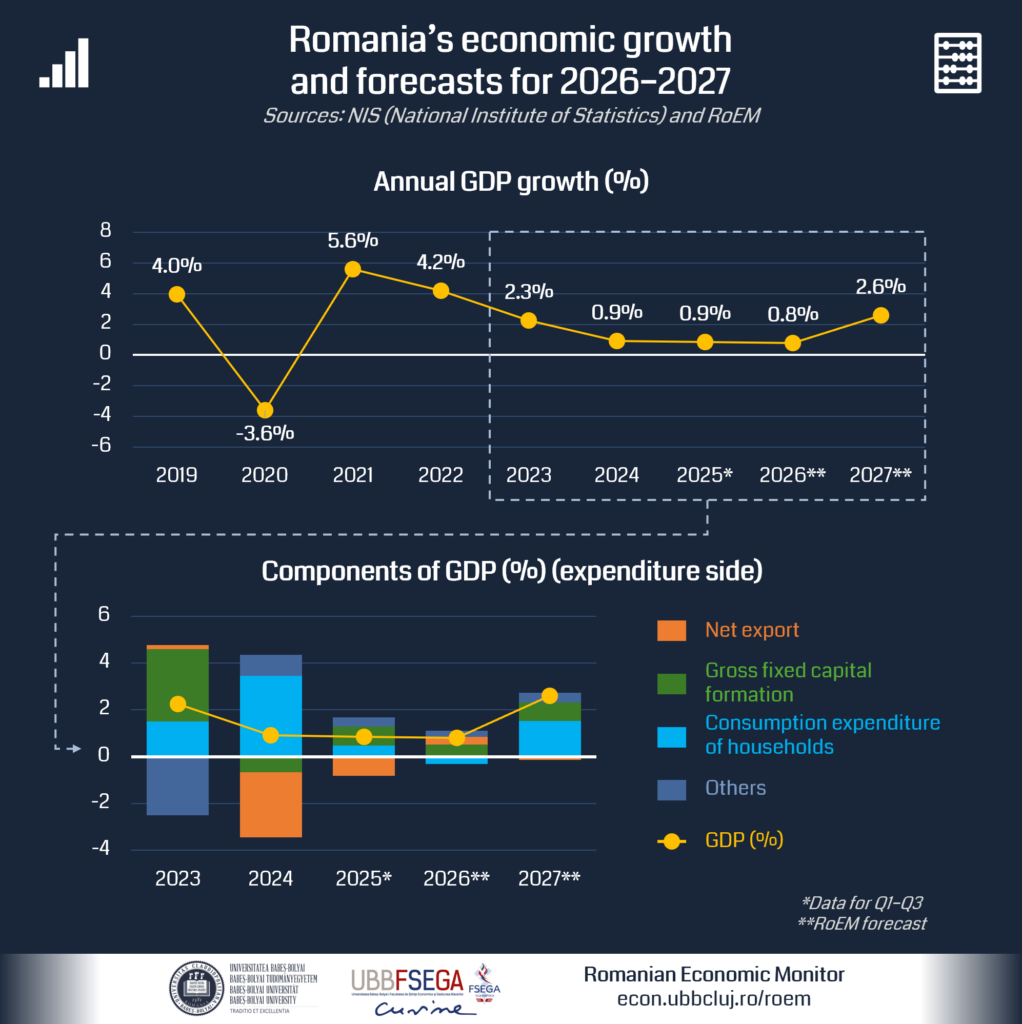
Romania may be heading into a “mirror year” in 2026. Full-year GDP growth and average inflation could end up looking similar to 2025, but the intra-year sequencing may flip: 2025 started relatively better and ended worse, while 2026 may start weak and improve into H2 as disinflation resumes and the fiscal consolidation shock fades.
After +0.9% YoY growth in the first nine months of 2025, the economy likely ended the year on a weak note. We therefore look for around 0.8% growth in 2025 as a whole (vs. ~1% market consensus). Even so, this would still point to relative resilience given the scale of fiscal tightening. The flash estimate for Q4 2025 is due on 13 February 2026.
In 2025, household consumption suffered as real disposable income came under pressure amid cooling wage dynamics and a pick-up in inflation linked to painful but urgent fiscal consolidation measures. This was partially offset by stronger investments, fueled primarily by EU-funded projects (and related co-financing). Net exports were less of a drag: exports grew on a relatively resilient EU backdrop (despite the tariff shock) and Schengen-related improvements in border logistics. Meanwhile, imports slowed with softer domestic demand.
2026 could be a mirror image of 2025: similar full year growth, but improving momentum into H2. After a weak start, activity may gradually strengthen as the drag from the front-loaded consolidation package fades, disinflation resumes, substantial EU funds become available, and fiscal related financial stress subsides as well. Even so, our baseline remains +0.8% GDP growth in 2026. A more pronounced rebound (+2.6%) is expected in 2027.
On average, household consumption will weigh on growth, reflecting the lagged hit to real disposable income from elevated inflation, cooling labor market conditions and fiscal consolidation measures that restrained social transfers (including pensions). That said, the drag on consumption may be partly cushioned by stronger household balance sheets, following a sharp rise in net wealth in recent years. This buffer is likely concentrated among higher-income households, often in major cities, and may therefore only partially stabilize aggregate spending.
The outlook could begin to improve in the second half of 2026, as inflation is set to fall sharply – helped by favorable base effects, a negative output gap, slower unit labor cost growth and normalizing inflation expectations. Together with the planned mid-year minimum-wage hike of nearly 7%, this should support real incomes and consumer confidence.
With domestic consumption remaining generally subdued, and the EU economy showing relative resilience (according to market consensus), we expect net exports to register a significant positive contribution to growth. Overall, we also anticipate that investment will provide another meaningful boost to GDP growth in 2026, supported by the prospect of strong EU fund absorption and elevated public investment.
Regarding key domestic risk factors, it is worth noting that the budget deficit is on track to come in just below 6.5% of GDP in 2026, without the need for major additional tax increases. However, political tensions or any significant developments that undermine the coalition’s ability to maintain a gradual fiscal consolidation path could revive concerns and trigger serious financing pressures. Reducing Romania’s macroeconomic imbalances is even more critical in a global environment marked by geopolitical tensions and persistently high public debt levels.