
Wage growth and regional disparities in Romania
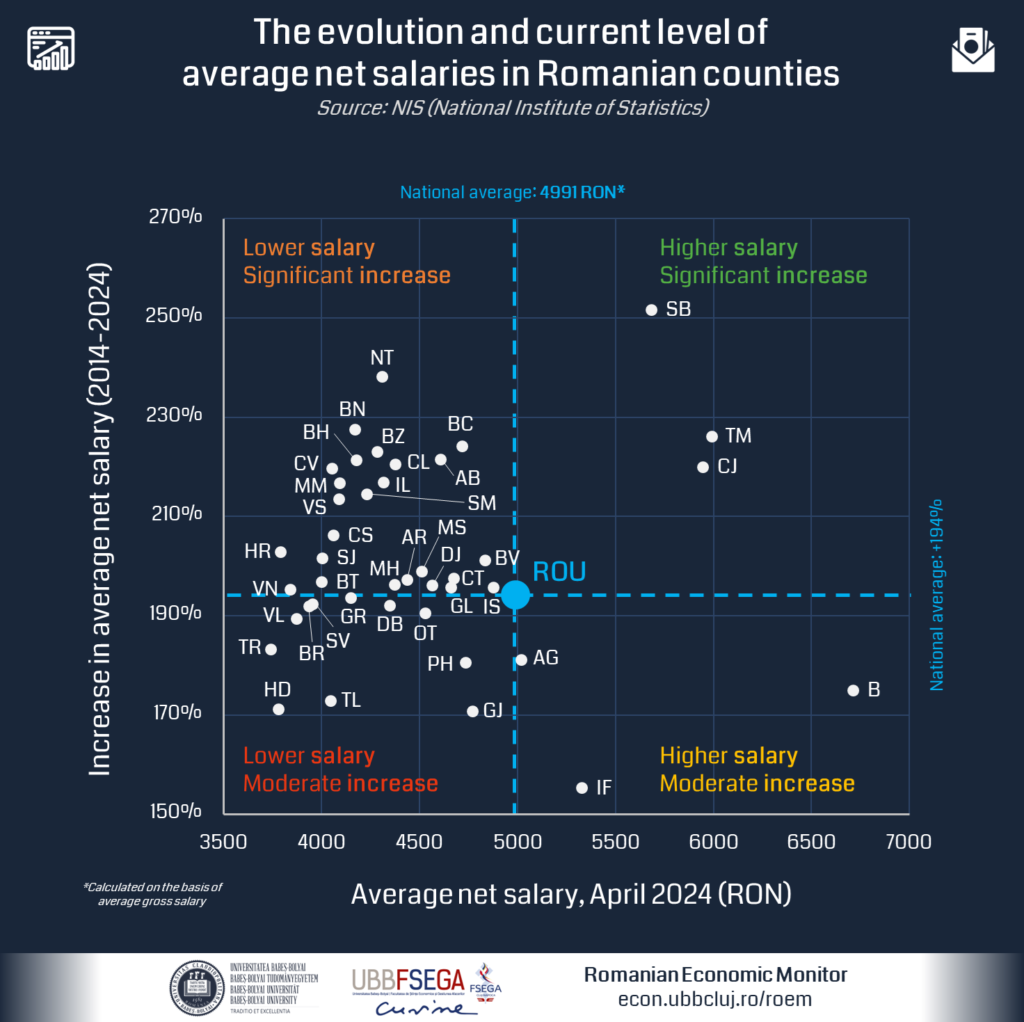
Over the past decade, Romania has significantly approached the European average in various economic indicators, including average wages. Since 2013, the average wage has nearly tripled nominally, rising from 1,579 RON to 4,584 RON in 2023. Adjusted for inflation, real wages have increased by 89%. However, there are significant regional disparities. In only 5 counties and Bucharest do average wages exceed the national average, while the other 36 counties fall below.
Despite these inequalities, wage growth in 25 of the lower-wage counties has outpaced the national average, indicating a slow convergence. However, 11 counties remain at risk of economic lag due to both lower-than-average wages and slower wage growth. While Bucharest and five counties have wages above the national average, only Cluj, Sibiu, and Timiș show above-average growth potential.
Overall, despite persistent disparities, a gradual convergence in wage distribution is observed. For example, the wage gap between the lowest (Harghita) and highest (Bucharest) average wages has narrowed from 95% in 2014 to 80% in 2024. To accelerate this convergence, investment in disadvantaged regions is crucial.