
Romania’s twin deficit problem as a persistent economic challenge
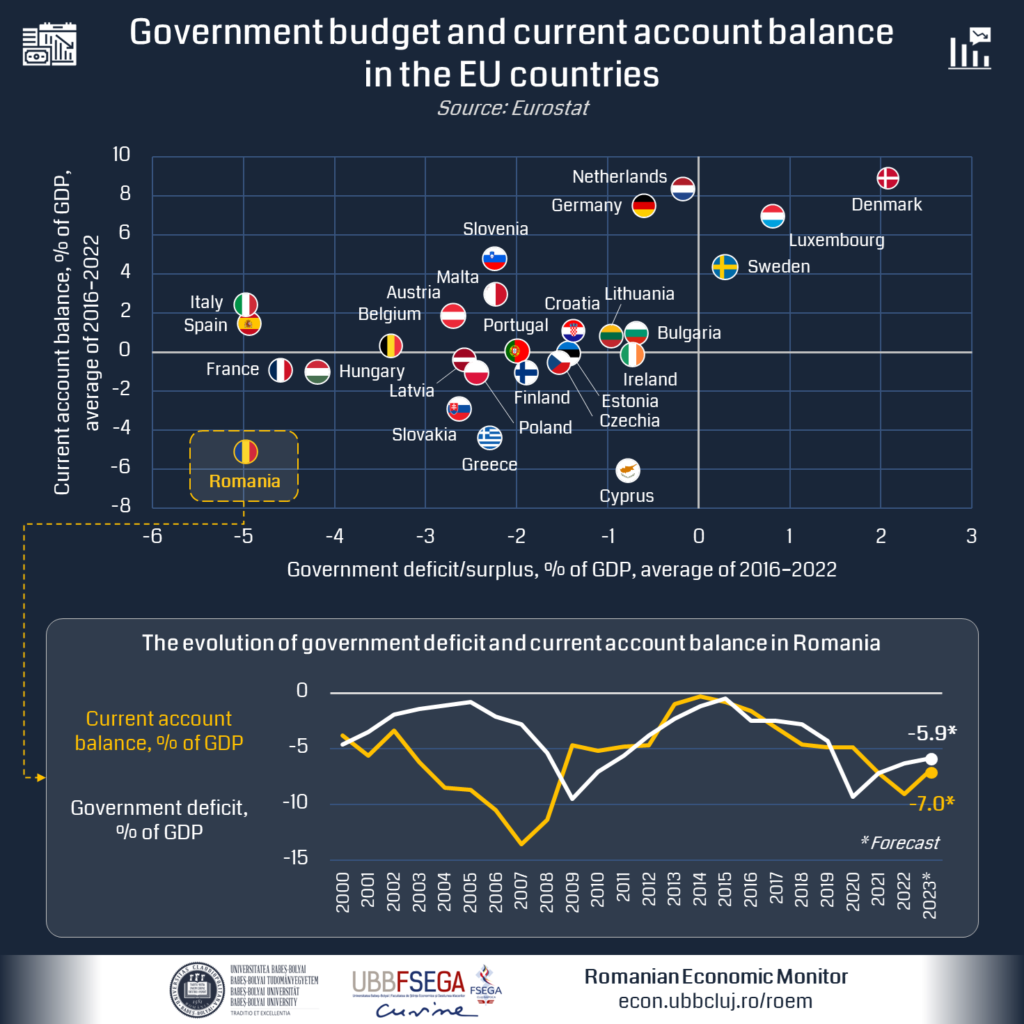
Twin deficit refers to a situation where a country faces both a budget deficit (when government spending exceeds revenues) and a current account deficit (when imports surpass exports). In Romania, both indicators have been in deficit in recent years. Romania currently has the worst twin deficit situation in the European Union, with both deficits averaging around -5% of GDP over the last six years. Only Italy and Spain have seen similar budget deficits, but their current accounts remained positive.
Since 2019, Romania’s budget deficit has consistently exceeded the 3% threshold, triggering the European Commission’s excessive deficit procedure. This could restrict Romania’s access to EU funds. Forecasts for 2023 and 2024 suggest no significant improvement in the budget situation.
The twin deficits pose a significant vulnerability, as rising government debt increases financing costs and risks devaluing the national currency. In a slowing global economy, these deficits amplify negative economic impacts, as seen during the 2008-2009 financial crisis. Addressing the issue would require strict measures to reduce the budget deficit.