
Inflation rate decreases significantly: the controversial role of price caps
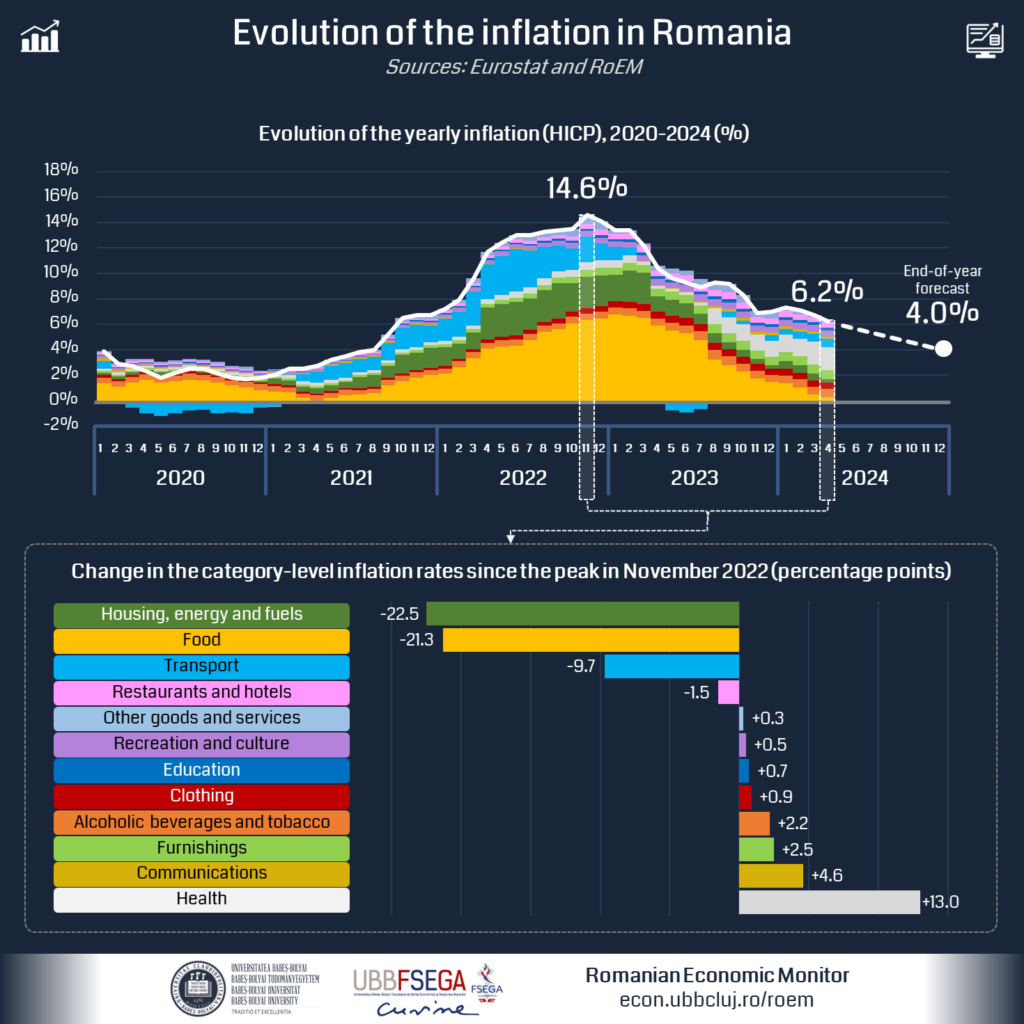
According to the National Statistical Office, the inflation rate in April 2024 dropped to 5.9% from 6.6% in March. Despite being the highest in the EU, this decrease exceeded most analysts’ expectations, mainly due to capped gas and energy prices. In early May, the Energy Ministry announced a 25% drop in gas bills and a 15% drop in electricity bills for April.
Our team has revised its inflation forecast from 5.0% to 4.0%, while the Romanian National Bank predicts a 4.9% inflation rate by December 2024.
Factors contributing to inflation reduction:
- Housing, Energy, and Fuel
- Food
- Transportation
Energy and food price caps, alongside global price normalization, contributed to the inflation drop. Despite price increases in these categories, the rate of increase has slowed, reducing their impact on overall inflation.
Reasons for persistently high inflation
- Increased consumer spending
- Rising labor costs
- Budget deficit coverage needs
- 2024 fiscal changes
The “Healthcare” category, especially due to last year’s significant increase in drug prices, remains a major contributor to high inflation. Price caps on some food items, while reducing immediate inflation impact, may become counterproductive, leading retailers to raise prices on other goods like hygiene products.
Conclusion
Centrally controlled pricing can have long-term negative effects. We expect these measures to be phased out after the election year, allowing market mechanisms to better regulate prices.